
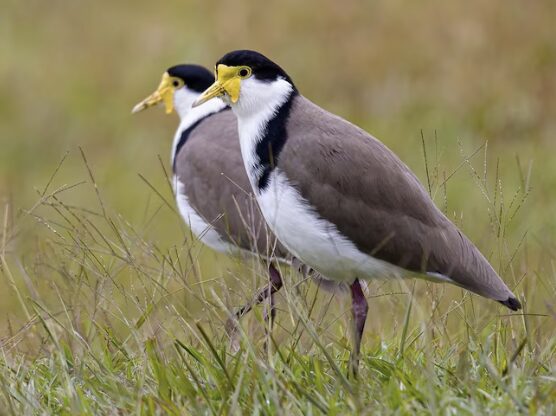
Plovers (also known as ‘masked lapwings’) can be quite protective during nesting season from August to November (sometimes extending into summer). This has been the case on the Young Street / Hughes Court grassed area near our school.
Here’s how to avoid being swooped — safely and respectfully:
Understand their Behaviour: Plovers swoop because they’re defending their nest or chicks, which are often on open ground like ovals, carparks, or schoolyards.
They usually don’t actually hit people — their swooping is mostly a bluff.
Tips to Avoid Being Swooped:
1. Stay clear of nesting areas
• If you see warning signs, circling birds, or hear loud squawking, change your route.
• Avoid walking or playing close to where plovers are standing guard or calling loudly.
2. Keep calm and walk briskly away
• Don’t run or wave your arms — it can make them more aggressive.
• Keep moving calmly and steadily until you’re out of their territory (usually about 30–50 metres).
3. Use an umbrella or hat for protection
• Hold an umbrella or hat above your head if you need to pass through an area where plovers are swooping.
• Some people wear broad-brimmed hats or even carry a stick upright to make themselves appear taller — they usually swoop at the highest point.
4. Look down, not up
• Keeping eye contact can make them feel challenged — it’s better to look slightly down while moving away.
6. Do not approach nests or chicks
• Even after chicks hatch, parents will continue to swoop for several weeks.
Helpful to Remember
• Plovers are protected native birds, so you shouldn’t harm or relocate them.
• Their nesting season is short — once the chicks can fly (after about 6–8 weeks), they’ll stop swooping.
We have contacted the council to inform them of their nesting location.